Interpreting a Love Tarot Reading: Understanding Your Cards Without Predicting Your Future
Interpreting a Love Tarot Reading: Understanding Your Cards Without Predicting Your Future
What if an unsettling card doesn't predict a breakup but invites you to see your relationship differently? A love tarot reading isn't about isolating a single card or taking it as a certainty. This guide shows you how to read cards in context, connect their messages, and welcome symbols with nuance, so you can turn the reading into practical reflection steps and approach your next move with clarity.
Published on:
17/10/2026
What if an unsettling card doesn't predict a breakup but invites you to see your situation differently? When you do a love reading, it's natural to look for a precise meaning, especially when several cards seem to contradict each other. Yet interpreting a love tarot spread isn't about isolating one card or taking it as a definite prediction.
Your question, each card's position and the connections between their symbols matter just as much as their traditional meanings. The same archetype can suggest different lines of thought depending on your situation and what it stirs within you. A spread can shed light on your emotions, expectations, or tensions that need clarifying, without deciding the future of your relationship for you.
In this article, you'll learn to read cards in context, connect their messages and welcome symbols with nuance. You'll also be able to turn this reading into practical reflection points and consider a next step that respects your needs and your free will. A psychic chat reading can help you put your questions into words and gain perspective, without making a spread a verdict.
Key Points
Connect each symbol to your question, your experience and the card's position in the spread.
When interpreting a love tarot spread, read the cards together rather than drawing a conclusion from a single card.
A difficult card doesn't necessarily announce a breakup: examine several possible readings before concluding.
Summarize the spread as a feeling and a question to explore, then distingush what depends on you from what depends on the other person.
To go deeper into your reading, describe your cards and your context during a private chat session.
Interpreting a Love Tarot Reading: What the Cards Can Shed Light On
Interpreting a love spread isn't about searching for a hidden answer in each card taken separately. It's about relating symbols, the question you asked and your lived experience. An archetype can suggest a need for dialogue, a hesitation or a desire for change. Its meaning depends on what you're going through and its position in the spread.
Also keep an essential limit: a card is not proof of another person's feelings or intentions. It cannot check what someone thinks in secret. Rather, it can help you examine your perception of the relationship, what reassures you, worries you or what you miss. Love tarot interpretation becomes more accurate when it opens questions instead of imposing a conclusion.
A love spread helps explore a situation without fixing the outcome. See it as a symbolic tool to gain perspective, not a decision made for you. If the cards invite you to think about a conversation, a boundary or a need, ask yourself if that path matches your reality and what you'd like to do about it.
To make this reflection concrete, separate what you observe from what you imagine. For example, 'we communicate less often' describes a situation; 'this person doesn't care about me anymore' is an interpretation that still needs to be confronted with dialogue and facts. The spread can shed light on the worry behind that thought, without turning it into a certainty.
What question to ask before a love spread?
Choose an open-ended question, centered on your situation and your needs. Instead of asking 'Will we stay together?', try: 'What does this relationship bring up in me?' or 'What do I need to move forward with more clarity?' These formulations allow several possible outcomes and don't claim to reveal the other's private thoughts.
Does a card necessarily announce a love event?
No. A symbol can echo a theme, a tension or a possibility, without announcing that something will happen. Before labeling a card as positive or negative, look at the question asked, the other cards and your own reaction. A sign of change may invite you to see a dynamic differently. It doesn't decide your relationship or your next actions.
How to Interpret a Love Tarot Spread, Card by Card?
To build your own reading, move step by step instead of immediately seeking a ready-made meaning. Love tarot interpretation begins with your question and the structure of the spread: the same card doesn't play the same role depending on where it appears and the angle linked to that position. Jot down a few notes before consulting a guide or an outside interpretation. This way you can distinguish your initial reaction from the ideas you discover later.
Follow this reading order, adapting it to the spread you have chosen:
Reread your question. Remind yourself of what you want to shed light on. If your question is about communication, for example, keep that topic in mind instead of letting the reading drift toward a general prediction about the couple's future.
Identify each card's position. Consult the spread's structure to understand the angle represented by each spot. Don't assign a specific role to a position if your model doesn't define it.
Observe the symbol and your first impression. Note the details that catch your attention, the emotion you feel and your spontaneous associations. Write them down before looking up a meaning in a book or elsewhere.
Connect the cards together. Look for a common theme or a contrast, then compare that insight with your question and the facts you know. View your interpretation as a hypothesis to examine, not a definite conclusion.
What does a card's position in a spread mean?
A position is a reading angle defined by the structure of the chosen spread. A single card drawn on its own doesn't necessarily have the same function as a card placed in response to a precise question. If the model distinguishes several placements, rely on the roles it assigns. If no role is specified, don't invent fixed meanings: simply describe what the card evokes in connection with your question.
How to connect several cards without overinterpretation?
Start by noticing a similarity or an opposition between the images, gestures or atmospheres. If one card evokes waiting and another communication, ask yourself if your situation mixes patience and a need for dialogue. Then check this reading against known facts, without transforming a symbolic association into proof. If several interpretations remain possible, note them and observe which one actually helps you reflect.
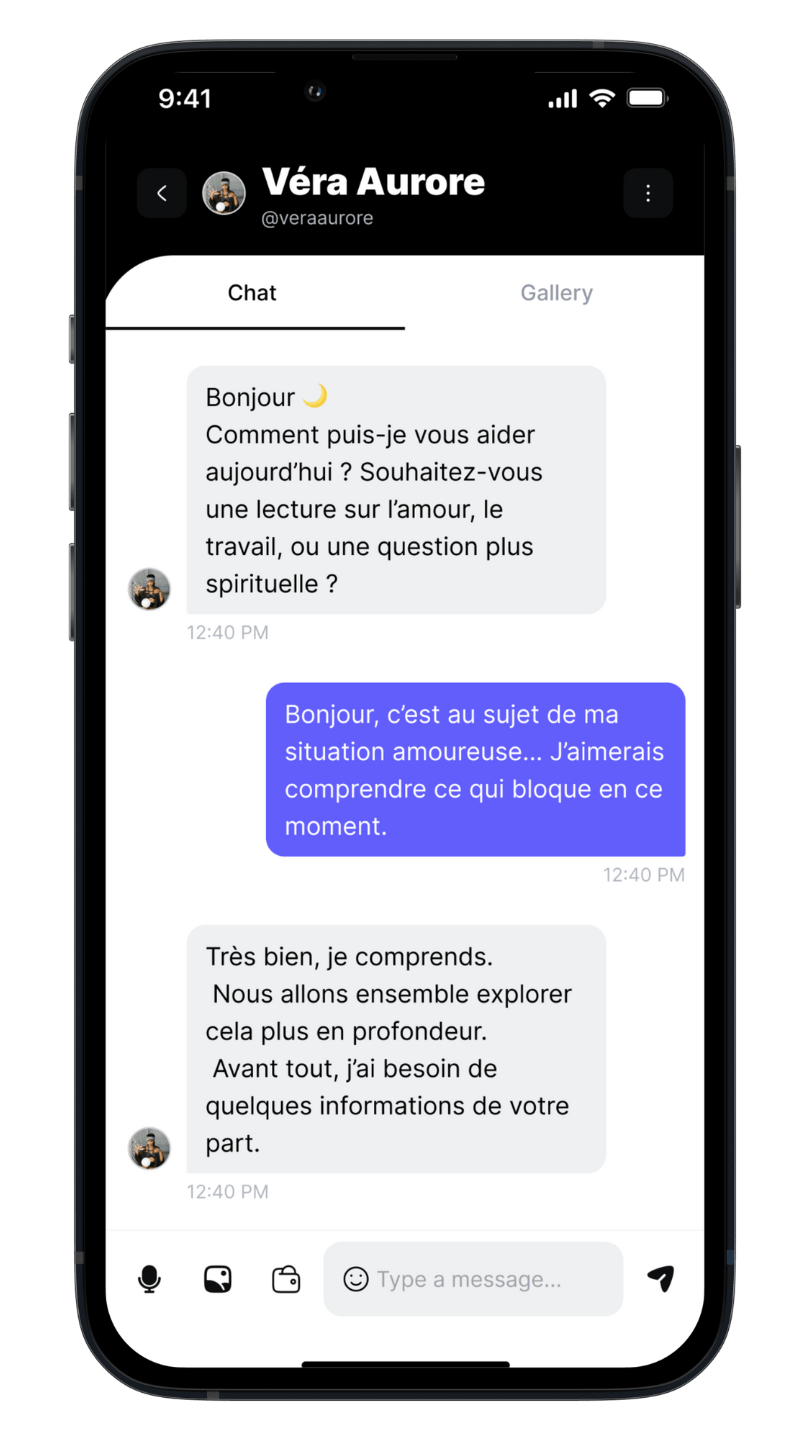
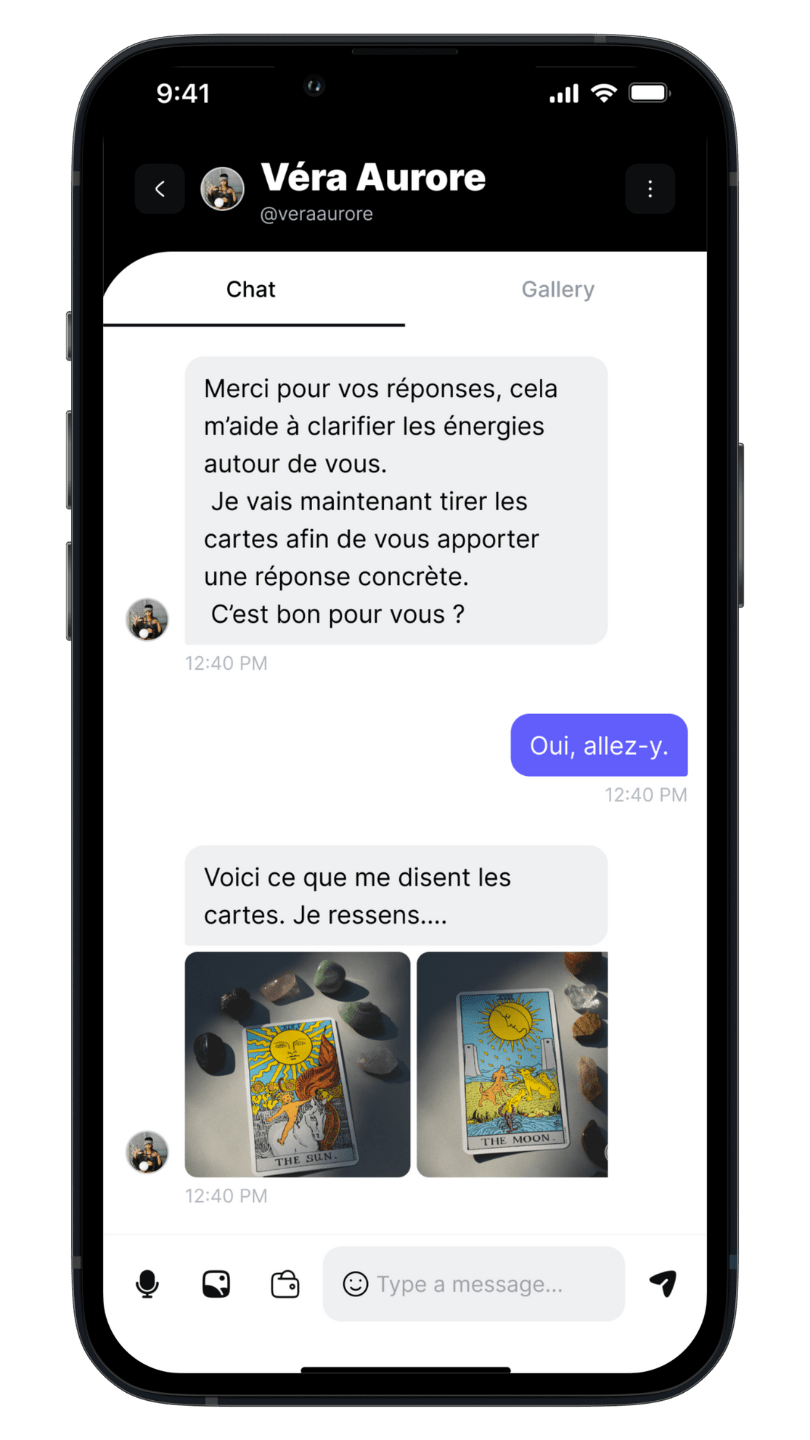
Chat can also offer you a space to describe the cards drawn, state the question that guided you and put your first reading into words. A tarot chat reading can support your reflection without deciding the meaning for you.
Difficult Card or Positive Message: Avoiding Misinterpretations in Love
A card that makes you uncomfortable doesn't condemn your relationship. Yet, when we fear a breakup or a period of distance, it's easy to only hold onto the details that seem to confirm that fear. A literal reading then turns a symbol into an announced event; a selective reading sets aside the cards that nuance the message. Love tarot interpretation gains from distinguishing what the spread shows from what worry makes it say.
Your feelings deserve to be heard, without becoming proof. If a card upsets you, ask yourself what it touches: a past experience, a current difficulty or a fear for the future? This question allows you to welcome the emotion while leaving room for other readings. A single card isn't enough to conclude about a couple's future.
How to read a worrying card?
Start by describing the symbol without immediately attaching a definite outcome. Go back to your initial question, then look at the cards around it and their role in your spread. If the whole thing seems alarming to you, pause before making a decision or sending a message on impulse. You can come back to the reading when you feel more available.
Compare the two approaches. An alarmist reading might conclude that a period of silence necessarily means a separation. A contextualized reading instead notes silence as an element to examine, then considers it alongside the question asked, the other symbols and observable facts. This nuance doesn't minimize your discomfort or a real difficulty; it avoids turning a possibility into a certainty.
How to avoid reading only what you hope?
To avoid making the spread say what you fear or wish to hear, first separate visible elements from your expectations. Note what you observe on the cards, then the personal associations they awaken. Before settling on an interpretation, formulate several and ask yourself which one best aligns with the question and the concrete situation.
Observed element: describe an image, posture or contrast without immediately attaching an event to it.
Personal reaction: name the hope or fear this image brings up.
Avenu to check: see if this reading matches facts or a real exchange, rather than a speculation about the other person.
An interpretation remains a working hypothesis. It doesn't replace a necessary conversation or the observation of concrete behaviors. If several avenues remain possible, keep them open: you don't have to decide immediately. The spread can help you clarify what you feel and what you'd like to bring light to, while your choices remain guided by your needs and the reality of the relationship.
Turning Love Tarot Interpretation into Useful Reflection
A reading makes full sense when it helps you identify what you want to understand, rather than waiting for the cards to choose for you. To bridge the symbols and your daily life, sum up your spread in three elements: a question that remains open, a feeling you recognize and a concrete path to explore. This synthesis makes love tarot interpretation more personal and helps you move from reflection to a step that is your own.
For example, your question could be: 'What do I lack in this relationship?' Your feeling: 'I feel uncertain when our exchanges are rare.' The path to explore could then be to specify what you'd like to express or ask. This isn't a command dictated by a card, but a way to name your need and decide if you wish to talk about it.
Distinguish what pertains to you from what depends on the other person. You can choose your words, set a boundary, ask for a conversation or step back. You can't decide for the other what they feel or how they will respond. To shed light on your choice, observe relationship facts: regularity of exchanges, commitments kept and how each person takes part in the relationship. A card can feed a question, but concrete behaviors provide another kind of insight.
What questions to ask after a love spread?
Ask yourself what the reading brings up about your needs, expectations and limits. What would you like to see evolve? What feels acceptable to you today, and what no longer is? Based on your answers, choose a measured action consistent with the actual situation, such as phrasing a clear request or taking time to reflect. Avoid turning a symbol into an order you should obey.
A love guidance can also help you put these questions into words. To deepen this reflection, discover Love Future by Chat and share the context that nourishes your questions.
When to draw again, and when to take a break?
If you draw cards again right after a first reading hoping to get a more reassuring answer, the messages risk becoming muddled. Take a break when successive draws increase your confusion or push you to act urgently. Coming back to your notes later, with some perspective, can help you distinguish your initial emotion from what you actually observe in the relationship.
It's not necessary to get a definitive answer to move forward. You can keep a question open, wait until you have more information or choose a next step that respects your needs. The spread remains a tool for reflection; your decision is yours.
Deepening a Love Spread with Chat Guidance
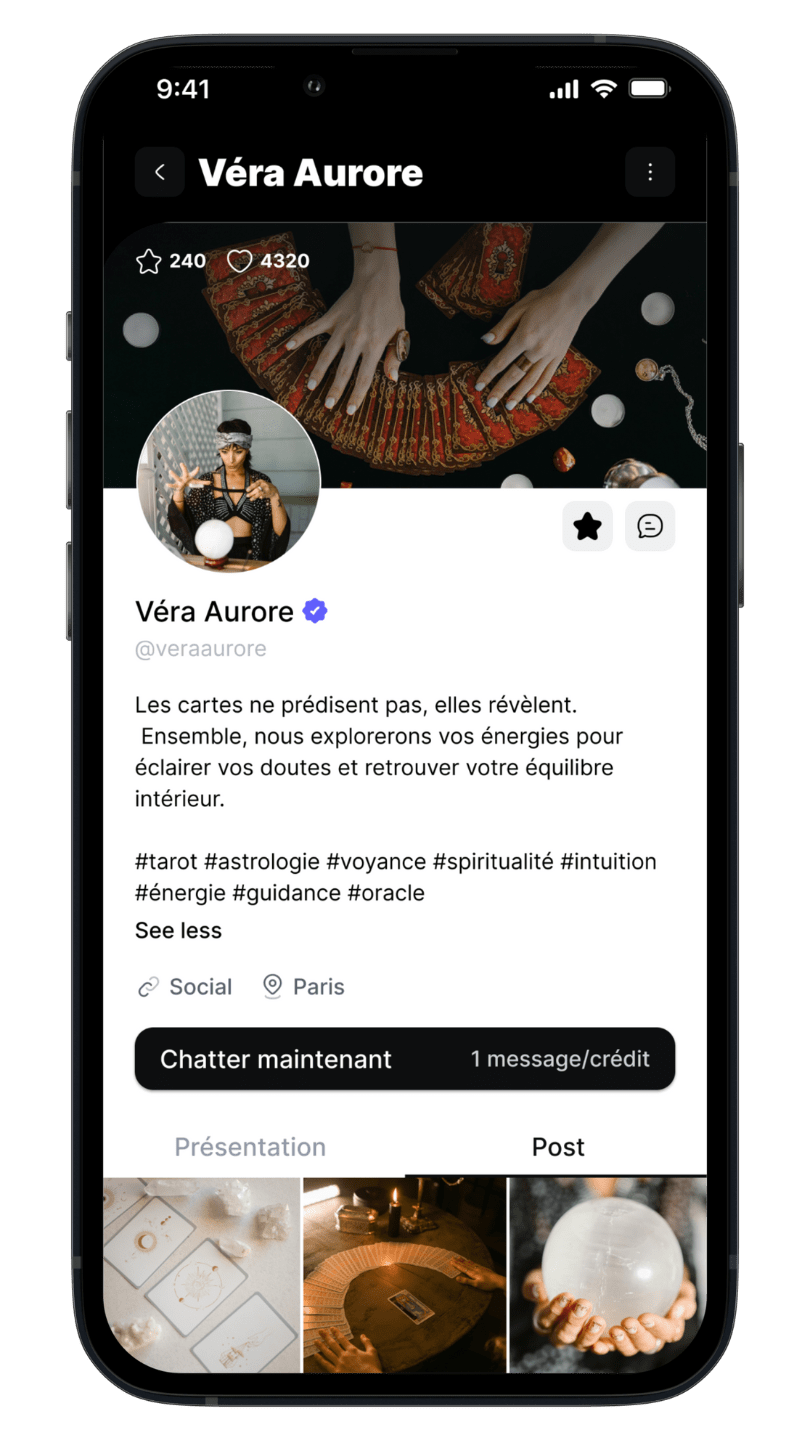
After observing your cards, you may want to compare your initial reading with another perspective. Breeve offers private chat consultations around love questions, including tarot-type readings. With the written format, you can describe your spread and the situation that concerns you, then receive personalized insight within a confidential setting.
This process doesn't turn the cards into a verdict and doesn't promise a prediction. It can help you refine your question, consider several ways to understand a symbol and put into words what leaves you in doubt. You remain free to keep the avenues that speak to you, compare them with your experience or leave them aside.
How to prepare for a tarot reading by chat?
Start by stating what you're seeking to understand. If you've already drawn cards, indiquate which ones and, if you know it, their position in your spread. Add the releant context: for example, what has changed in your communication or the question that comes up often. You don't need to share personal details that don't seem necessary to you.
It can also be useful to specify what confuses you the most. Is it the meaning of a card, the contrast between several symbols or the difficulty linking the spread to your experience? A clear request gives a starting point for the exchange without boxing the interpretation into a single expected answer. Finally, keep in mind that the suggested avenues are insights, not instructions: you can welcome them, examine them or set them aside as feels right to you.
What role can a psychic reader play in the reading?
A psychic reader can support you in clarifying your question and exploring different reading angles from the cards and the context you share. This exchange can notably help distinguish what the spread evokes from what you concretely know of your relationship. Breeve connects you with certified psychics for chat consultations. A reading remains an insight, and does not decide the course of your story.
To explore the benchmarks associated with a reliable psychic chat reading, take the time to see how guidance can support your reflection without taking away your free will. If you want to put your cards and your question into words, chat with a psychic reader to deepen your love reading.
Choose Your Next Step with Confidence
After a reading, you don't need to solve your entire love story at once. Rather, let the reading open a reflection: what would you like to better understand, express or preserve in your relationship? You can move at your own pace, staying attentive to real exchanges and what matters to you. That's how love tarot interpretation can become a starting point, without locking your future into a single reading.
If a question remains present, putting it into words can help you approach it from a different angle. A personalized chat guidance can offer a space to reflect on what the cards awaken, while letting you free to decide what suits you. The choice of your next step is yours.
How to interpret a love tarot spread when you're single?
When you're single, connect the cards to your relationship with dating and your expectations, rather than looking for a specific date or an announced person. For example, ask yourself what helps you feel available for a new relationship, or what pace of meeting would suit you. A card may bring to light a need for time, trust or openness, without guaranteeing that a meeting will take place.
What does the Lovers card mean in a love spread?
The Lovers card can evoke a bond, an attraction or a choice worth reflecting on, but its meaning depends on the question and its position in the spread. It doesn't automatically mean that a relationship is mutual or that commitment is imminent. Instead, ask yourself what emotional choice is presenting itself, what values matter to you and whether the lived situation matches your expectations.
Does a negative card predict a breakup?
No, a card perceived as negative does not allow concluding that a breakup will happen. It may draw your attention to a discomfort, a communication difficulty or a need that is not being heard. To gain perspective, compare this impression to concrete elements: have you talked about the problem, do the same tensions keep coming up and have your expectations changed? The symbol alone does not settle these questions.
Can you do a love tarot reading to know if someone thinks about you?
A reading cannot check another person's private thoughts. If this question worries you, you can instead explore what feeds your doubt: a recent exchange, a lack of news or a behavior that's hard to understand. Ask yourself what you'd like to clarify in your relationship with that person. This refocuses the reading on your experience, without turning a supposition into fact.
How many cards should you draw for a love question?
There's no single number that fits all questions: it depends on the chosen spread and the clarity of its positions. For a focused inquiry, one card can serve as a starting point for your reflection. If you draw several, define the role of each position before you begin. Adding cards without a clear structure risks making the reading harder to follow.
Should you redraw a tarot reading if you don't like the answer?
Redrawing the cards immediately to get a more pleasant answer risks fostering uncertainty rather than dispelling it. Before starting over, note what displeased you in the first reading and ask yourself if the question was precise enough. Wait until you have a new reason to consult the cards, such as a change in the situation or a different need for reflection. You don't need to act urgently.
How to ask a clear question for a love spread?
For a love tarot interpretation process, state a single open-ended question, linked to an identifiable situation and what you want to understand. For example, instead of asking 'Will I find love?', try: 'What would help me approach dating with more confidence?' This phrasing focuses on your experience and leaves room for several avenues, without asking the cards to set the future.