Emotional blocks often stem from painful experiences, loss, or prolonged stress, leading to repetitive reactions and avoidance. This article explores how these blocks form, their impact on daily life, relationships, and work, and offers practical steps to acknowledge emotions and reconnect with yourself. A psychic chat reading can provide a fresh perspective, but the final choices remain yours.
Published on:
26/10/2026
An emotional block doesn't appear without reason: it can form after a painful experience, a loss, a shock, or a period of intense stress, when emotions remain difficult to welcome or express. Fear and insecurity can also feed this inner lock. A psychic reading to understand an emotional block can offer a perspective on what you're going through, without deciding for you.
You may feel like you're repeating the same reactions, avoiding certain situations, or feeling held back in a relationship. These feelings deserve to be listened to, without necessarily providing a single explanation: everyone lives their story in their own way. Noticing what triggers an emotion can already help you better understand what's at play.
In this article, you'll discover how emotional blocks can form, how repressed emotions get reactivated, and what effects these mechanisms can have on daily life, relationships, and work. You'll also find ways to welcome your feelings and understand the role that psychic reading can play in this reflection, while keeping control over your choices.
Key Points
Notice how painful experiences, losses, or lasting stress can contribute to an emotional block.
Observe repetitive reactions, avoidance, and relationship difficulties without taking them alone as proof of a block.
Learn to identify what you feel, the moments when the emotion appears, and what seems to trigger it.
Discover ways to welcome your emotions and reconnect with your body, without trying to solve everything at once.
Understand how an intuitive reading can shed light on a situation, while leaving you free to make your own choices.
An emotional block can form when a painful experience remains difficult to live with or express. A grief kept to oneself, a sudden breakup, or a shock can leave an emotion without space to be acknowledged. The person goes on with their activities, but certain memories or contexts can rekindle fear, sadness, or anger. This mechanism is not always conscious.
Relationship experiences also matter. After repeated criticism, a person may fear displeasing and silence their needs, even in a more secure relationship. A betrayal can, for example, make it hard to trust a new partner. Fear, insecurity, and a strong sense of inferiority can then influence reactions and choices.
Intense or lasting stress, such as high anxiety, can contribute to this inner lock. Unresolved childhood traumas and early losses are also among the possible origins. Post-traumatic stress can be associated with emotional difficulties, but no single sign is enough to establish a diagnosis. Old wounds can nonetheless shape perceptions in adulthood.
To explore an emotion, start with a simple question: what do you feel, when does it appear, and does a past event come to mind? If a harmless remark triggers a very strong reaction, note the context and what it reminds you of. This observation doesn't prove a cause, but helps distinguish the present situation from past experiences. Some memories may be painful to face: go at your own pace.
Psychology and therapy aim to understand emotional difficulties through appropriate support methods. Psychic reading offers an intuitive interpretation, without diagnosis or treatment. A consultation can, for example, help reflect on a relational pattern, but does not replace therapeutic support when suffering is deep.
When choosing a consultation, favor a clear approach and be wary of absolute certainties or pressure. A helpful reading leaves room for your discernment and does not claim to make a psychological diagnosis.
Remotely, an exchange can also help you reflect on your situation, if this format suits you. The setting, office or screen, is not enough to measure the value of an intuitive reading.
A consultation can start from your question, then explore the emotions and situations you choose to bring up. For a psychic reading to understand an emotional block, keep in mind that you remain free to accept or not the paths suggested.
Ask open-ended questions, for example: 'In what situations does this block seem to appear?' or 'What could help me step back?' Avoid asking for certainty about a trauma or about another person's thoughts.
A promise of certain healing, a threat, or an insistent request to continue consultations are warning signs. A serious approach respects your boundaries and does not push you to hand over your decisions to someone else.
2. Consequences on Daily Life, Relationships, and Work
An emotional block can complicate ordinary actions, without manifesting the same way in everyone. A person may put off a difficult call, hesitate for a long time before a decision, or avoid a place associated with a memory. Repeated negative patterns, social withdrawal, and persistent fatigue can also appear. These signs have several possible causes and do not, by themselves, prove the existence of a block.
In a relationship, an old fear can influence how you interpret silences or disagreements. After a breakup, for example, an unanswered message may be experienced as certain rejection, even if other explanations are possible. The person may then shut down, constantly seek reassurance, or doubt their worth. To spot the mechanism, note the situation, your interpretation, and your reaction, then compare them to observable facts.
At work, fear of failure can hold back a job application, speaking up, or a request for advancement. Hesitations and concentration difficulties can make a usual task more demanding. Prolonged stress can also be accompanied by bodily tensions or a feeling of exhaustion. If these difficulties persist or intensify, a conversation with a health professional allows you to examine possible causes, without automatically attributing every symptom to emotions.
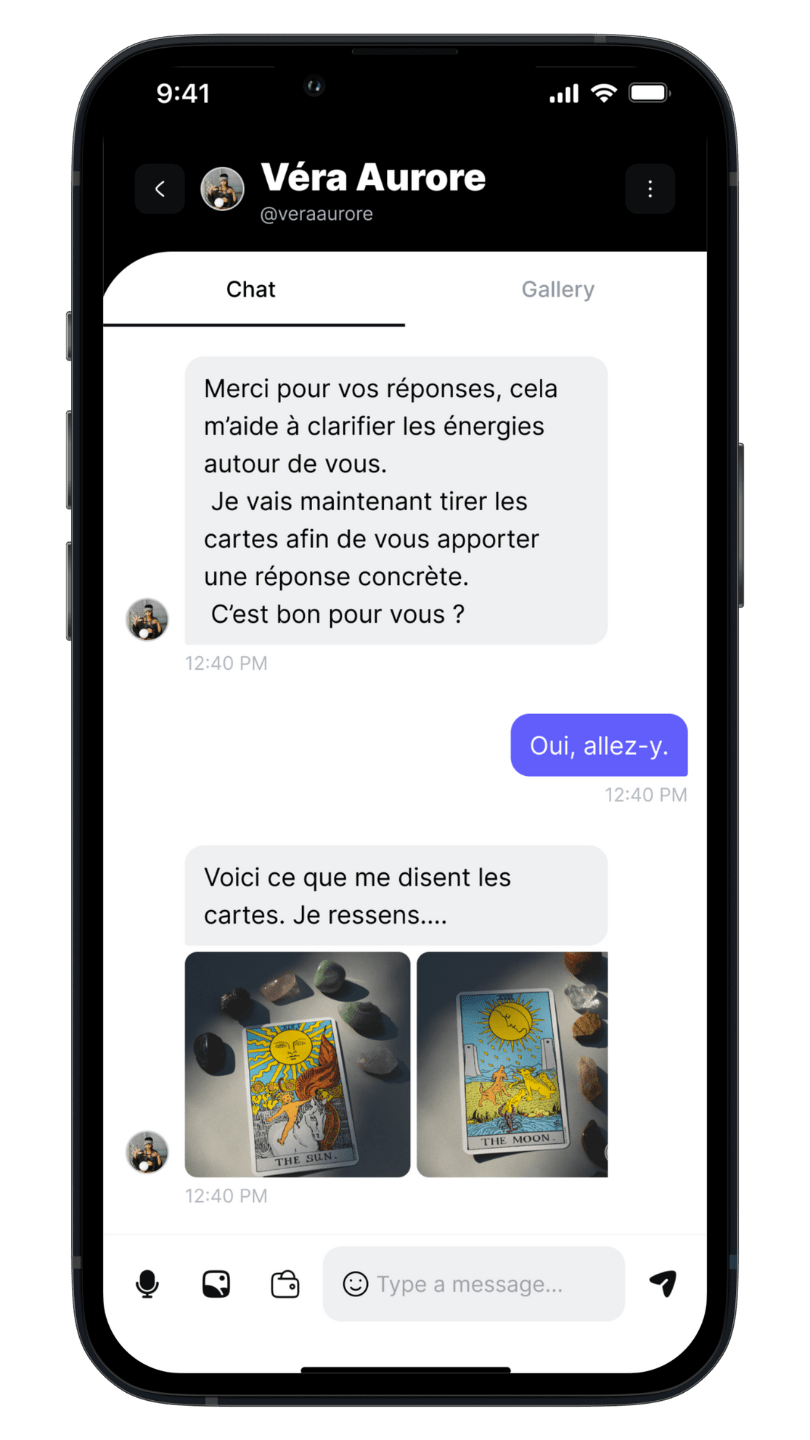
A tarot spread can serve as a reflection tool, rather than proof of the origin of a difficulty. One proposed method uses five cards to explore the area concerned, what feeds the block, and paths forward. The first card, chosen from the minor arcana, indicates the area; the third sheds light on a possible cause. Swords evoke the mental realm, wands prestige or work, pentacles social ties or money, and cups the emotional realm. In this interpretation, upright cards suggest actions, while reversed ones invite examining inner work. Two cards can also open a reflection on a path toward peace. These symbols remain paths, not instructions.
To explore these situations, an intuitive reading or tarot spread can help put into words relational, personal, or professional questions. Psychic reading does not diagnose a disorder and does not heal; it does not replace appropriate support. No direct link is established between the signs mentioned and an emotional block. Headaches or digestive discomfort require a medical opinion.
If you want to step back from a specific situation, quick psychic answers can provide a starting point for your reflection. Keep your own bearings and choose the paths that truly help you move forward.
3. Self-Acceptance and Preventing New Blocks
Preventing the formation of new blocks starts with precise observation, without judgment. When an emotion appears, take a moment to identify it: anger, fear, sadness, or shame? Also note the situation, the intensity felt, and what happened just before. For example, a remark at work may seem harmless, but awaken the feeling of being devalued. Distinguishing the present event from your interpretation helps you better understand your reactions.
Welcoming an emotion does not mean approving everything it pushes you to do. You can acknowledge 'I am angry' without immediately sending a hurtful message. Not systematically denying or hiding a feeling helps understand what it signals. Try to describe the emotion in simple words, then ask yourself what you need: rest, a clear boundary, or a conversation. This approach does not force you to relive difficult situations alone.
A practical approach unfolds in 3 steps: acknowledge the feeling, return to the body, then express the emotion in an appropriate way. For the first step, name what is happening without calling yourself 'too sensitive.' Next, notice the present sensations, like a clenched jaw or short breathing. Finally, choose a respectful expression: write a few lines, talk to a trusted person, or take a quiet moment before responding.
Breathe: a 4-7-8 practice involves inhaling for 4 seconds, holding your breath for 7 seconds, then exhaling for 8 seconds. If holding your breath is uncomfortable, return to natural, slow breathing.
Write: freely record what you feel, the context, and your needs, without seeking perfect wording.
Move the body: try a slow walk, gentle movements, or a body scan to notice tensions without forcing them.
Prevention is built in ordinary actions. After a disagreement, for example, take a moment to distinguish the facts, your emotions, and the response you want to give. If the same trigger comes up, spot it in your notes and observe what changes from one situation to another. This repetition can help identify your limits and express them earlier. Welcome modest progress: the goal is not to stop feeling difficult emotions.
If an intense memory or persistent low mood makes these exercises difficult, appropriate professional support can help you move forward at your own pace. Sophrology, intuitive writing, or guided visualization can also serve as exploration tools, depending on your preferences. Choose a practice that feels comfortable, stop if it increases your distress, and prioritize specialized help when suffering takes up too much space.
4. Definition of Emotional Block and Repressed Emotions
An emotional block refers to a difficulty in fully living or expressing a painful emotion. The term describes an experience, but does not automatically explain every reaction. A person may, for example, recount a breakup without managing to talk about their disappointment, or joke as soon as a conversation touches on a sensitive subject. The emotion then seems kept at a distance, sometimes even from oneself.
Repressing an emotion does not necessarily mean consciously deciding to hide it. Someone may learn to minimize their anger because it caused arguments, or to silence their grief so as not to worry loved ones. Over time, this way of reacting can seem familiar. Yet, avoiding a feeling and having moved past it are not the same thing: avoidance can make the situation harder to understand.
An emotion set aside can reactivate in a present context that recalls, even indirectly, a past event. For example, a person who experienced a painful separation may feel strong worry when a new partner asks for space. This reaction does not prove that the relationship will end. It may rather signal that the present moment connects to a meaningful experience.
Repetitive patterns sometimes give a clue about this reactivation. A person may accept an unbalanced relationship several times, then blame themselves for not setting a boundary. Another may cut off exchanges as soon as a disagreement arises. In both cases, the observable behavior deserves to be distinguished from the interpretation attributed to it. The same gesture can have different meanings depending on each person's history and situation.
Not all difficult emotions are repressed, and their intensity alone does not allow concluding a block. A strong reaction after a disappointment may correspond to the real importance of the event. Conversely, a discreet reaction does not necessarily mean the person feels nothing. Context, consequences on relationships, and the repetition of the same scenario bring more nuance than an isolated sign.
To better understand the term, distinguish three elements: the emotion felt, the way it is expressed, and what it seems to protect. For example, behind a silence after a criticism may lie shame, the need to avoid conflict, or the fear of being judged. These are only paths, not certainties. They allow describing the experience more precisely, without reducing the person to a label.
Finally, talking about repressed emotions does not mean asserting that a hidden memory necessarily explains a current difficulty. An intuitive reading can offer a personal interpretation, but it remains a path to compare with your own experience. If an explanation does not fit you, you do not have to adopt it. This distinction allows exploring your feelings without turning a hypothesis into an imposed truth.
Emotional Dependency, Fear of Abandonment, and Self-Sabotage
In a relationship, fear of abandonment can lead to looking for signs of rejection in every silence. An unanswered message for a day can then seem to prove that the other is pulling away. The person may feel intense worry, often ask for reassurance, or give up their own activities. These reactions are not enough to define emotional dependency, but they deserve to be observed.
Emotional dependency here refers to an imbalance experienced in the bond: the other's gaze takes up so much space that personal needs take a back seat. Someone may accept exchanges that hurt them, for fear of losing the relationship. However, wanting closeness or going through a period of insecurity does not automatically mean being dependent. Context, reciprocity, and the ability to preserve one's choices also matter.
Self-sabotage can take the form of actions that push away what one desires. A person who wants a stable relationship may cut off a conversation as soon as it becomes serious, or test their partner with repeated accusations. These actions may temporarily reduce uncertainty, but risk fueling tensions. To better understand what is at play, compare the triggering event, the fear felt, and the action chosen.
A concrete exercise is to write three lines after a difficult situation: 'What happened?', 'What did I fear?', 'What did I need?'. For example, after a change in tone from a partner, distinguish the observed fact from the interpretation 'he is going to leave.' Then choose a response that respects your boundaries, like asking for clarification without accusing yourself or the other. This pause helps regain energy to act according to your values.
In a symbolic tarot reading, cups refer to the emotional realm. This association can help examine expectations, needs, or events weighing on a relationship. It does not prove that someone will abandon you and does not allow knowing their intentions with certainty. Keep the reading as an invitation to reflect, not as a reason to monitor, confront, or hold onto someone.
To move forward, identify one thing you stopped doing for fear of displeasing: seeing a loved one, expressing a disagreement, or taking time alone. Reintroduce this activity at your own pace, then note what you feel. If fear persistently disrupts your daily life or relationships, a health professional can help you explore this suffering.
If you want to reflect on a specific romantic situation, you can get quick psychic answers. Use the paths suggested to clarify your questions, while keeping the decision in your hands.
Breeve: Psychic Chat Readings
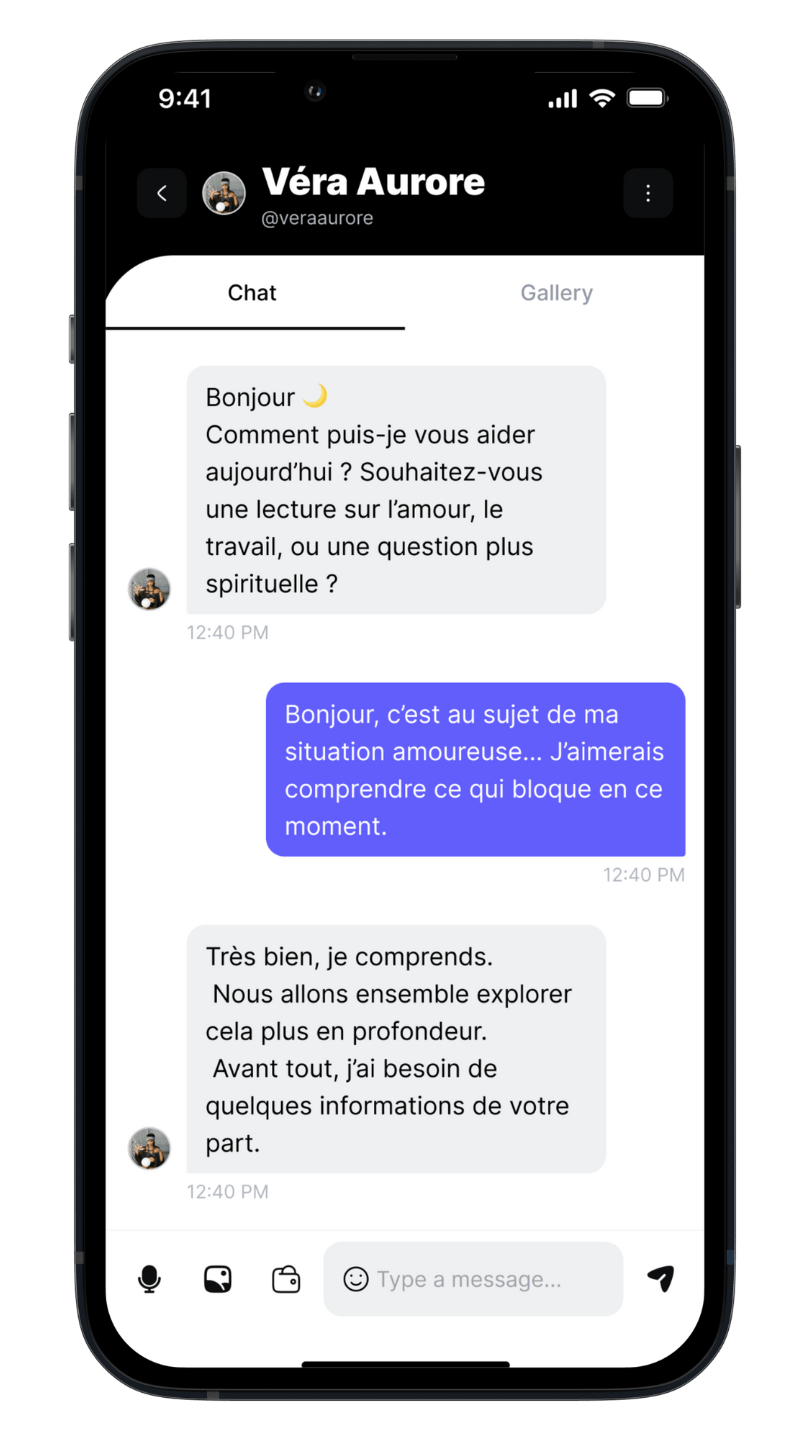
Breeve offers psychic chat readings to help you step back from a situation that concerns you. If your question is about a relationship, a love and relationship reading can help clarify your questions. For a career choice, a career reading offers another perspective. You can also choose a phone exchange, depending on the format that suits you.
Before the exchange, formulate a precise question, for example: 'What influences the way I experience this relationship?' An intuitive reading can offer paths, without making a diagnosis or deciding for you. Keep your discernment and retain only the elements that seem useful to you.
Understanding a block does not mean having to solve everything immediately. You can choose a small marker for the future: note a recurring reaction, set a boundary in a relationship, or set aside a moment to listen to yourself without judgment. Stay attentive to what helps you regain clarity, rather than imposing a pace that doesn't suit you.
A psychic reading to understand an emotional block can open a path for reflection when you want to look at a situation from another angle. Keep your questions at the center of the exchange and take the time to discern what resonates with your experience. Your decisions remain yours; every step forward can start with a modest, chosen approach.
If you want to continue this reflection with Breeve, contact Breeve to chat. Move forward at your own pace, with curiosity and kindness toward yourself.
Frequently Asked Questions
How do emotional blocks form?
They sometimes develop gradually, rather than from a single event. A way of reacting that once helped get through a difficult period may become less suited to a new context. For example, staying silent may have avoided conflict in the past, but later complicate an important discussion. To understand this evolution, observe how a strategy became established and whether it still meets your current needs.
Love block: why do people consult when a relationship isn't moving forward?
One may consult to clarify what one expects from a relationship and what remains acceptable for oneself. Before the exchange, ask yourself whether your concern is about communication, reciprocity, or your own hesitation. This precision allows centering the reflection on elements you can observe or express, rather than trying to guess the other's intentions. A direct conversation can then help compare your impressions with the facts.
Life block: why do people feel the need to consult a psychic?
A person may seek an outside perspective when they struggle to prioritize several options. To make the reflection concrete, write down the choices considered and the criteria important to you, such as available time, responsibilities, or the meaning given to this project. An intuitive consultation can feed this reflection, but the decision benefits from taking real constraints into account. You can then try a small exploratory step before fully committing.
How to take concrete action to regain balance?
Start by reducing a source of overload rather than transforming your entire routine. If a decision is consuming you, define what needs to be decided and what can wait, then ask for a specific opinion from someone involved. A clear boundary, like postponing a discussion when you are exhausted, can also preserve your availability. Then reassess this measure based on its effects, instead of demanding immediate change in all areas.
Conclusion: how to move forward after a period of blockage?
To move forward, choose a marker that will help you notice progress, rather than waiting to feel perfectly sure. It could be taking back a responsibility left aside or accepting an invitation you tended to avoid. After this step, ask yourself what seemed easier or more difficult. This feedback helps adjust the next steps and recognize your progress, even if it remains discreet.
Can you unblock your emotions alone?
You can often start alone by reflecting on your needs and testing small changes. However, it is not necessary to try to retrieve every memory or force yourself to relive an experience. If the exploration becomes overwhelming, disrupts sleep, or makes usual activities difficult, stop the exercise and seek appropriate support. Asking for help does not cancel your autonomy; it can simply offer a safer framework to continue.
How can psychic reading help understand an emotional block?
An intuitive reading can offer an interpretation that helps you formulate a question differently. To make the most of the exchange, ask for possible paths rather than certainty about the origin of your experience. After the consultation, distinguish what speaks to you from what does not match your experience, then compare your impressions with observable facts. Psychic reading thus remains a reflection tool, without diagnosis or imposed decision.