Questions to Ask About Love, Encounters, and Your Romantic Future in a Psychic Reading
Questions to Ask About Love, Encounters, and Your Romantic Future in a Psychic Reading
Learn how to ask the right questions during a love psychic reading to explore feelings, potential reunions, and future encounters. Discover open-ended questions that help you reflect on your needs and make clearer decisions, rather than seeking yes-or-no answers.
Published on:
31/10/2026
The best question isn't just "Will he come back?" but also what you can understand and decide about this relationship. To know what questions to ask during a love psychic reading, phrase an open-ended question about the dynamic of the connection, the signs to watch for before a possible reconciliation, and your own needs. This way you'll get more useful insights than a simple yes or no.
When a relationship is uncertain or a breakup leaves questions hanging, the need to know what the other person thinks can be very strong. But by steering the conversation toward your feelings, your expectations, and the choices available to you, you keep your place in the reflection.
You'll discover examples of questions about couple life, an ex's return, upcoming encounters, and romantic decisions. You'll also see how to prepare your consultation and clarify your requests to make it a clearer and more personal time of reflection.
Key Points
Explore the feelings and dynamic of a budding relationship without jumping to conclusions from a silence.
When discussing your upcoming encounters, focus on the pace that suits you and how to approach a new connection.
Prefer open-ended questions, which allow you to examine several avenues, over requests limited to a yes or no.
Prepare a main question and a few follow-ups to steer the conversation toward your needs and choices.
Phrase your requests precisely to make the consultation a useful time of reflection for your situation.
1. Can you consult a love psychic for a couple question?
Yes, a love consultation can help you examine a relationship, whether it's established or just beginning. For a new encounter, ask: "How can I understand the expressed intentions and the dynamic of this connection?" This phrasing invites reflection on the exchanges you've observed, without interpreting a silence as proof of disinterest. You can also ask how to build the relationship without rushing.
In a couple, direct your questions toward concrete changes. For example: "What can I improve in my communication with my partner?" or "What actions could deepen our connection?" These help you consider your role in the dynamic and look for ways to act, rather than waiting for an answer that would decide for you.
Tensions also deserve to be examined precisely. If arguments keep coming back to the same topics, ask what need remains unexpressed or what real issue lies behind these disagreements. You can then explore the boundaries to set and the pace that feels healthy to you. By mentioning a recent example, you anchor the exchange in your daily life.
A recent encounter can spark projections: a late message can sometimes wrongly seem like a sure sign. Ask yourself whether you're interpreting the facts or whether your expectations are filling in the gaps. Repeated difficulties can also echo past experiences. Asking what relationship pattern is repeating helps you spot a reaction to evolve, without concluding that every new story will follow the same path.
Your emotional well-being can also guide you. Does this relationship bring you inner peace or cause constant tension? This question helps you compare your feelings to the facts, like the quality of your exchanges or the space given to your boundaries. If your feelings seem mutual, ask how to contribute to a more positive dynamic, rather than trying to control the other person.
To prepare, take a few minutes to write down a main question and the concrete example that explains it. Add one or two follow-ups about your needs, your expectations, or the next step you're considering. This preparation also works for a phone exchange: it helps you stay focused on your request and get answers related to your situation.
Keep in mind, however, the limits of a consultation: it doesn't set a date for a meeting, a marriage, or an ex's return. It also cannot verify another person's thoughts, social circles, or secret intentions. The risk is taking an interpretation for a certainty, then neglecting the facts and your own choices. Keep these benchmarks in mind when exploring the possible evolution of your relationship.
2. Exploring future encounters and romantic evolution
When you're single, a consultation can help you reflect on important encounters and your way of welcoming a new relationship. Rather than asking for a specific date, inquire about periods that seem favorable and conditions conducive to a meeting. You can ask: "How can I recognize an opportunity to create a connection that matches my expectations?" The answer opens a reflection on your choices, without reducing your future to a calendar.
To clarify your request, start from a concrete situation. If you're meeting new people, ask what contexts could foster a sincere exchange, or how to show yourself available without forcing it. You can also explore what you're really looking for: a stable relationship, a gradual closeness, or an encounter that helps you better define your needs. These examples make your questions more personal and less focused on an abstract prediction.
First dates often give food for thought. In the example of Camille, she pulls back after a few dates. A useful question would be: "What makes me retreat after a promising first approach?" It directs attention to her reactions, her expectations, and the pace that suits her. If you like someone, ask how to build the connection without mistaking early enthusiasm for already established compatibility.
To explore opportunities for meeting, ask what changes in your habits could create more of them. Think of a specific example: accepting an invitation, resuming a group activity, or talking more openly about your desires. The consultation can help you examine what depends on you, like your emotional availability and the space you give to new encounters. Distinguish these personal choices from elements you don't control, especially other people's decisions.
You can also reflect on your romantic future based on your current priorities. If a career transition is taking up a lot of space, ask how to preserve time and energy for your relational life. If you've just met someone, explore the pace that feels right and the concrete signs of mutual interest. A session is more useful when you connect the desired future to an action you can realistically consider.
Before the consultation, write down a question about upcoming encounters and another about your way of moving forward. For example: "What contexts would help me meet compatible people?" then "What habit could I evolve to welcome a relationship?" This preparation allows you to compare the suggested avenues with your experience. You leave with elements to observe and choices to weigh, rather than with a fixed expectation about a future encounter.
3. Open-ended vs closed questions in love psychic readings
A closed question often calls for a yes or no: "Will my ex come back?" An open-ended question allows you to explore the situation further: "What can I understand from this breakup and what remains for me to experience?" In a psychic reading, this second phrasing invites you to examine several avenues and reflect on the decisions that belong to you. It doesn't turn answers into certainties about another person's choices.
If you feel emotionally stuck after a separation, ask what's preventing you from moving forward and what actions could help you regain your balance. To discuss a return, replace "Will he come back?" with "What concrete signs should I observe before considering a reconciliation?" This way you'll get avenues for reflection on your expectations and boundaries, instead of suspending your choices on a prediction.
Romantic compatibility also lends itself to open-ended questions. For example: "What affinities nourish this relationship, and what gaps require a discussion?" You can then specify a concrete aspect, like life plans, the pace of exchanges, or how you handle disagreements. This approach helps you compare your real needs, rather than seeking a global answer that would sum up the entire relationship.
To anticipate obstacles, start from an identifiable difficulty: irregular messages, different expectations, or a disagreement about commitment. Ask: "What could complicate this relationship, and how can I prepare for it?" The answer can open a reflection on communication, boundaries, and your next actions. Then note a path to put into practice, like clearly expressing your need for regularity.
Faced with unrequited love or silence, phrase your question around your experience. "How can I step back from this lack of response?" or "What can I learn from this relationship?" These questions remain centered on what you can understand and choose. If the silence pushes you to reach out often, explore what would help you preserve your energy and respect your boundaries.
To assess the seriousness of a love psychic, observe whether their answers are nuanced, precise, and connected to your question. A quality exchange respects your decision-making ability, clearly presents its approach, and doesn't encourage you to depend on repeated consultations. For example, an answer that helps you formulate a boundary gives you more food for thought than a categorical statement about an ex's secret thoughts.
Before the session, write an open-ended question, then a follow-up about a concrete fact: "What's at play in this relationship?" then "What recent exchange sheds light on this situation?" This preparation helps you get more useful answers and keep the thread of your request. You can also note after the consultation the avenues that resonate with your experience, without confusing interpretation with personal decision.
4. Consulting a psychic reader: what questions to ask?
To talk about a current relationship, ask a question linked to a lived experience. You can ask: "What does our way of handling disagreements reveal about the couple's dynamic?" or "What needs remain difficult to express between my partner and me?" These phrasings address the future without claiming to know the other person's thoughts. They help you examine the exchanges and expectations that influence your bond.
If you're wondering about your partner's feelings, ask how to better understand what you perceive in their gestures and words. For example: "What elements of our relationship show emotional reciprocity?" Then mention a concrete moment, like an avoided conversation or a recent change in your daily life. This way you explore sincerity and each person's place, without confusing interpretation with proof.
To address communication difficulties, describe a specific example. If a discussion about your shared plans always ends in silence, ask what subject lies behind this reaction. You can also ask what actions would help you express your expectations more clearly. A question about how to listen to your partner can complement the exchange, especially if each person thinks they've already explained their point of view.
To understand the couple's dynamic, observe what repeats: who reinitiates conversations, how decisions are made, or what soothes an argument. Ask which strengths to support and what changes could rebalance the relationship. A consultation can also help you consider future difficulties and how to approach them together. Rely on observable situations rather than a general question like "Will our couple last?"
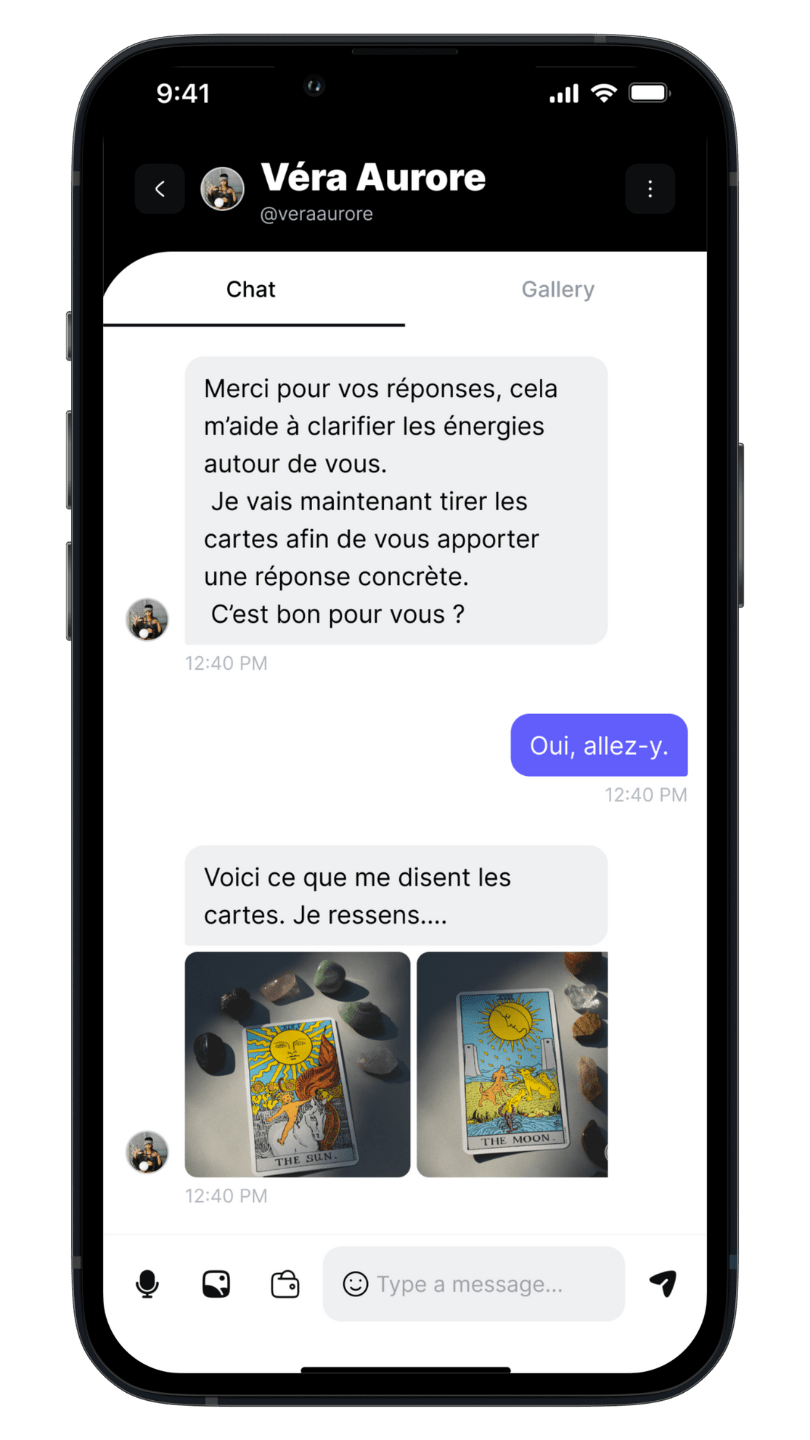
If you're hesitating between staying or separating, ask what each choice implies for your needs, your boundaries, and your plans. The tarot doesn't decide for you whether you should continue or leave the relationship. A more useful question would be: "What would need to change for me to feel good in this couple?" It highlights the conditions you consider essential, without transferring your responsibility to an external answer.
Before the session, choose a main question about your central concern, then prepare one or two follow-ups. For example: "How can I better understand the distance that has appeared between us?" then "What conversation could clarify our expectations?" Write down recent facts, your feelings, and the actions already tried. This preparation helps you distinguish what you observe from what you fear, then retain the avenues that match your experience.
5. Why ask precise questions in a psychic reading
A precise request helps keep the consultation focused on your real concern. "What will happen to my love life?" mixes future, encounters, and personal choices. Instead, start from an observable situation: "How can I address the distance that has appeared since our last conversation?" You can then reflect on a concrete subject rather than several worries at once.
To formulate a clear question, name the situation, what you want to understand, and the type of avenue that would help you move forward. For example: "Since my partner has been avoiding our shared plans, how can I open a dialogue?" This phrasing situates the problem and brings you back to a possible action, without asking someone to decide for you.
Precision also helps distinguish facts from your interpretations. If a close person responds less often, describe this change instead of concluding they no longer care about you. Ask: "How can I understand this evolution and what attitude should I adopt in our next exchanges?" This way you'll get avenues linked to a real example, which you can compare to your experience.
Avoid questions that seek to verify a person's secret thoughts, control their social circles, or obtain a certain date. "Does he think about me every night?" gives you no observable reference point. "What concrete signs would help me understand the quality of our exchanges?" instead allows you to address gestures, communication, and your own boundaries.
A precise question also reduces the risk of tackling several subjects at once. If you're hesitating between reconnecting with an ex and meeting someone new, first choose the most pressing concern. A follow-up can then shed light on the next step: what you want to preserve, what's holding you back, or the next conversation to have. This progression helps organize your thoughts.
Keep a record of the answers that speak to you, then link each one to a real situation. If an avenue concerns your way of communicating, ask yourself what change you could try in a next exchange. If it touches on your expectations, clarify what matters to you in a relationship. The value of the consultation lies in the reflection it sparks and the decisions you can make.
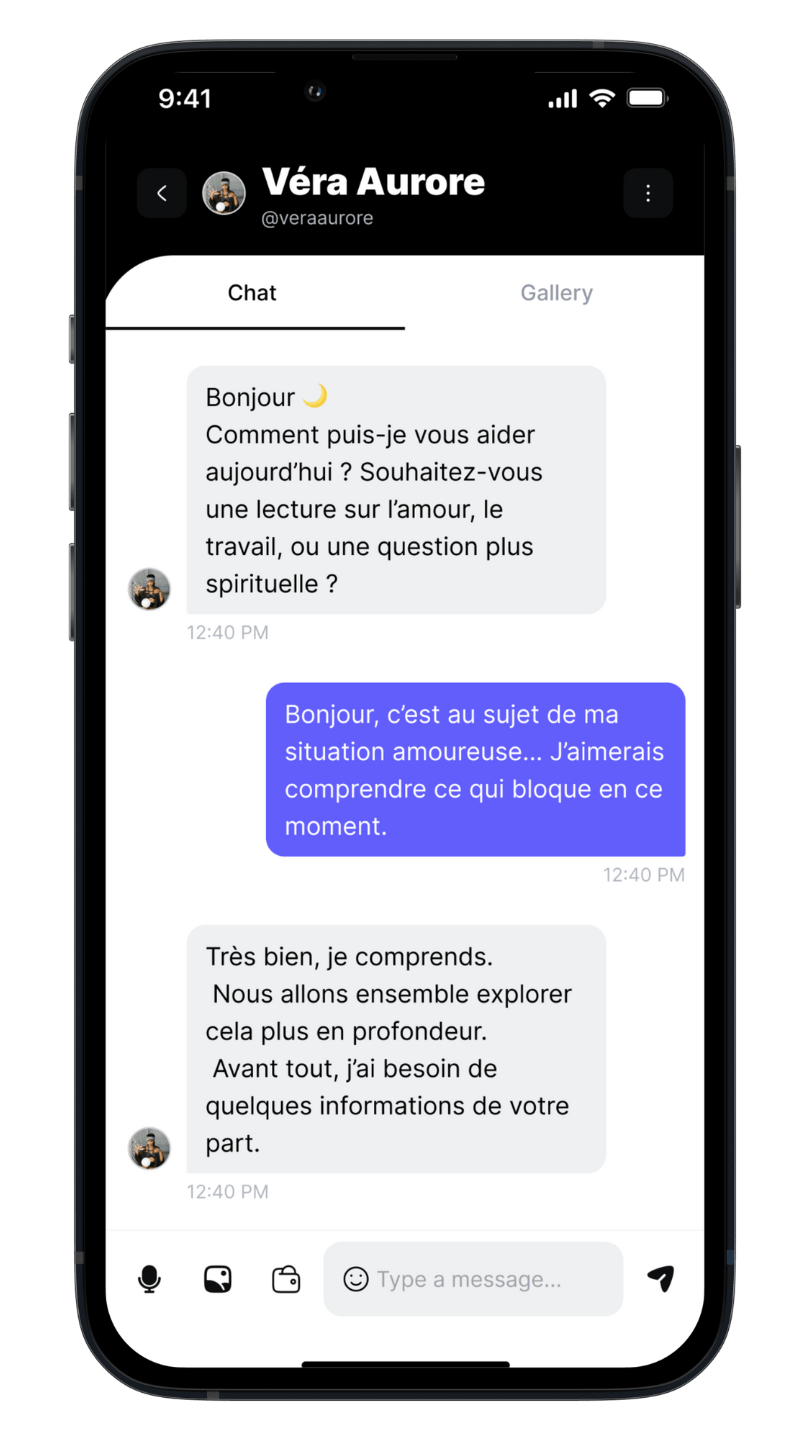
Breeve offers psychic chat readings to explore your love questions with a psychic reader. Whether you want to deepen a relationship, reflect on a reconciliation, or better understand a silence, the consultations dedicated to love and relationships provide a framework to ask your questions and examine different avenues.
The chat allows you to describe your situation in writing and keep your questions in front of you during the exchange. You can also choose a phone consultation if you prefer to speak directly. In both cases, prepare a specific topic, like a communication difficulty or a decision that concerns you, to stay focused on what you want to clarify.
If you'd like to continue this reflection, discover Breeve's consultations on breeve.io.
Turn Your Questions into a Next Step
A love question can be the starting point for a better understanding of your needs and your way of moving forward. Before an exchange, ask yourself what you want to clarify now, then stay open to answers that invite you to think differently. Knowing what questions to ask during a love psychic reading doesn't mean seeking a ready-made decision, but opening a reflection that remains your own.
Breeve offers chat consultations, particularly on love and relationships, as well as support for professional questions. If you want to put words to a situation that concerns you, choose the format that suits you and prepare your topic at your own pace.
Contact Breeve to exchange and start this reflection with a question that matters to you. You keep the freedom to retain the avenues that resonate with your experience and decide on the next steps with confidence.
Frequently Asked Questions About Love Psychic Readings
Can you ask if an ex will come back?
Yes, you can approach this possibility by steering the exchange toward what would make a reconnection desirable for you. For example: "What would need to be different for a reconciliation to be more balanced?" This phrasing emphasizes the conditions necessary to rebuild a relationship, rather than waiting for a message. It also helps you clarify what you would or wouldn't accept.
Consulting a psychic reader: what questions to ask?
Choose a question linked to a subject that concerns you now, then ask for a concrete avenue. If you're hesitating to reconnect with someone, you could ask: "What does this situation teach me about my expectations?" You can also question your way of communicating or the priorities you want to preserve. A request centered on your experience gives a guiding thread to the exchange.
Can a love psychic reading help after a breakup?
Yes, a consultation can help you reflect on what you want to understand or leave behind after a separation. You can ask: "What has this relationship taught me about my needs?" or "What boundary would help me turn the page?" If shared belongings or commitments still need to be settled, distinguish these practical matters from your reflection on your emotions and the next chapter of your love life.
Can you consult to find out if you'll meet someone?
Yes, you can talk about your romantic future and opportunities to create a connection. To make your request concrete, ask what contexts would help you meet new people, or how to recognize a relationship compatible with your priorities. You can also reflect on the activities you'd like to share with someone. These avenues direct your attention toward possible choices in your daily life.
Can you consult a love psychic for a couple question?
Yes, a consultation can focus on the relationship you're in and the questions it raises. If a shared project is at a standstill, ask what deserves to be clarified before making a decision. You can also examine the space given to your personal goals in your life as a couple. Describing a recent event, like an interrupted conversation, helps specify the subject.
What questions to ask when the other person stops responding?
Ask how to take care of your needs in the face of this silence, without immediately assuming what it means. For example: "What attitude would allow me to stay true to my boundaries?" You can then reflect on the type of response you're expecting and what you'll do if it doesn't come. Distinguishing a need for clarification from a desire to reach out helps you choose your next move.
Can a love psychic reading decide if I should break up?
No, the decision to stay or leave is yours. The consultation can instead help you examine the elements that matter to you: mutual respect, compatibility of plans, and the changes actually observed. Ask yourself what conditions are essential to your well-being in the relationship. If you're considering a separation, also think about the practical support and conversations needed to organize this transition.
What questions to ask during a love psychic reading?
Ask a question that helps you better understand your situation and your options. For example: "What aspect of this relationship do I need to clarify before acting?" Then choose a follow-up about your next step, like a conversation to prepare or a priority to define. You can note the elements that seem useful and compare them to your experience before making a decision.